Rural health clinics · CMS survey prep
Rural Health Clinic Emergency Preparedness: What §491.12 Requires
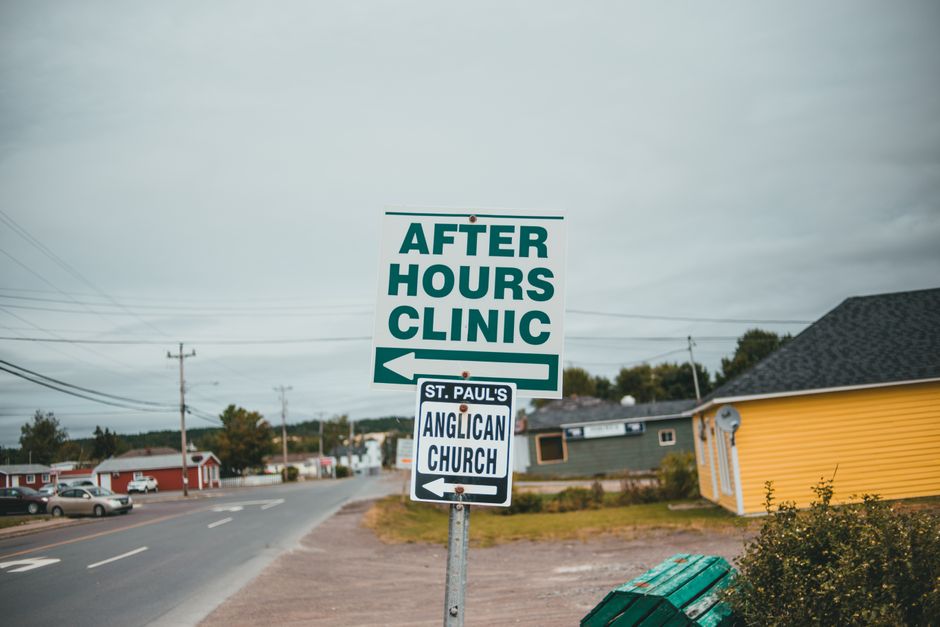
Photo by Erik Mclean · Pexels
If you run a rural health clinic, you're probably wearing five hats right now. Practice manager. Billing coordinator. HR department. Compliance officer. And sometimes, the person who answers the phone.
Emergency preparedness planning is probably not at the top of your list. But it's a condition of your Medicare participation, and when the surveyor comes, they'll check for it.
Most of the emergency preparedness content online is aimed at hospitals or nursing homes. The RHC-specific material that does exist — NARHC's plan example, ASPR TRACIE's resource page, a handful of state health departments — is written for regulators and reviewers, not for a practice manager trying to figure out what goes in the binder. It's all linked at the bottom of this post.
This post is different. It walks through every requirement under 42 CFR §491.12 in plain language, and it's written so you can actually build your plan from it.
What CMS Requires of RHCs
The CMS Emergency Preparedness Rule covers 17 provider and supplier types. Rural health clinics and federally qualified health centers are one of those types. The requirements for RHCs are less intensive than what hospitals face, but they're real. You need documentation across all four elements. You need to exercise your plan. And you need to keep everything updated.
What CMS does not require of RHCs: a multi-million-dollar emergency management program. This is a small clinic operation. Your plan can fit in a single binder. The point isn't to create a hospital-level program — it's to prove that you've thought through what your clinic would do in an emergency and that your staff knows the plan.
The Emergency Plan
Under §491.12(a), you must develop and maintain a written emergency preparedness plan, reviewed and updated at least every two years. Before you can write your plan, you need to figure out what you're planning for. CMS requires a documented risk assessment covering both your facility and your community, using an all-hazards approach.
Rural clinics face risks that urban facilities don't. Roads that flood and become impassable. Power outages that last days, not hours. Limited emergency services with long response times. Think about what actually happens in your county during severe weather. Think about what's near your clinic — a rail line carrying hazardous materials, a major highway, an agricultural facility that stores chemicals. Think about what happens when the power goes out: do you have a generator, and how long does it run? And think about internal risks — fire, plumbing failure, IT system crash, loss of key staff. COVID showed every rural clinic what a pandemic looks like in a small-town setting; document what you learned and what you'd do differently.
Write all of this down. This is your All-Hazards Risk Assessment, and it's the first document a surveyor will ask for.
Based on your risk assessment, your plan must include specific strategies for each emergency you identified. "We'll handle it" is not a strategy. "We'll activate our phone tree, contact patients with afternoon appointments to reschedule, and secure medications in the locked cabinet" — that's a strategy. Your plan also needs patient population considerations (who comes to your clinic — elderly patients who need transportation, patients with chronic conditions who can't miss appointments, patients who only speak Spanish), continuity of operations covering what happens if the clinic has to close for three days after a flood, and documented coordination with local emergency management, the county health department, and state agencies.
"We'll handle it" is not a strategy. The surveyor needs to see what you'll actually do, step by step, for every hazard you identified.
Policies and Procedures
Under §491.12(b), you must develop and implement written policies and procedures based on your emergency plan, reviewed every two years.
Evacuation Procedures
Your clinic needs written evacuation procedures covering exit routes and signage (are your exit signs visible and illuminated?), staff responsibilities for who helps patients evacuate, who grabs the medication lockbox, who does the final sweep, patient needs during evacuation (a patient in a wheelchair needs a different plan than a patient in the waiting room), and transportation for patients who arrived by medical transport.
Shelter-in-Place
Not every emergency means leaving the building. Your policies need to cover what happens when you stay — a tornado warning during clinic hours, a hazmat incident near the clinic, an active threat in the area requiring lockdown. What do you tell patients? Where do they go inside the building? Who's in charge?
Records and Staffing
You need a documented system for keeping patient records safe, confidential, and accessible during an emergency. If your EHR is cloud-based, you're in better shape, but you still need to document what happens if you lose internet. If you're still using paper charts, your plan needs to address protecting those physical records.
Your staffing policies must cover how you'll use volunteers (if applicable), emergency staffing strategies when regular staff can't get to the clinic, and how you'd integrate state or federally designated healthcare professionals during a surge. For many rural clinics, "staffing during emergencies" is a real problem — you might have two staff members total. Your plan should honestly address what happens when one or both can't get to the clinic.
The Communication Plan
Under §491.12(c), you must develop and maintain a communication plan, reviewed and updated at least every two years. You need current contact information for all staff members (with personal cell phones, not just work numbers), entities providing services under arrangement (labs, imaging, specialists), each patient's physician or practitioner, other clinics in your area for mutual aid, and volunteers. Keep a hard copy somewhere accessible — when the power's out and your computer won't start, you need to be able to reach people.
You also need contact information for your local emergency management (county emergency manager), state emergency management agency, State Survey Agency, local and state public health departments, and local fire and EMS.
For communication methods, you need two ways to communicate. In rural areas, this matters more than anywhere else because cell service may be unreliable, landlines sometimes go down with power, and internet outages last longer than in urban areas. Think about what actually works in your area — landline plus cell phone, cell phone plus two-way radio — whatever combination makes sense, document it.
Your plan also needs a HIPAA-compliant method for sharing patient information with another provider if your patients need care somewhere else during an emergency. At minimum, be ready to share patient name, date of birth, current medications, allergies, active diagnoses, and emergency contact information. And you need a way to tell local authorities whether your clinic is open, what you need, and whether you can accept patients.
Training and Testing
Under §491.12(d), every staff member — plus anyone providing services under arrangement and any volunteers — must receive emergency preparedness training when they start, with refreshers at least every two years and additional training when your plan or policies change significantly. You must document all training — who attended, what was covered, when it happened.
For a small clinic, training can be straightforward. Go through the plan together during a staff meeting. Walk through the evacuation route. Review the communication plan. Make sure everyone knows where the emergency binder is and what's in it. Then document that you did it.
Your exercise schedule: at least one per year, with a full-scale community-based or facility-based functional exercise required every two years. In the alternate year, a tabletop exercise is the most practical option for most RHCs. Sit down with your staff for 30–45 minutes, pick a scenario, talk through it, and document what you'd change. That's an exercise. You don't need a multi-agency production with fake casualties.
After every exercise, document what scenario you tested, what went well, what gaps you found, and what you're going to fix and when. This is your After-Action Report/Improvement Plan. The HSEEP format is what federal reviewers recognize, but the key is simply that you documented what you learned and updated your plan based on it. If your clinic activates its emergency plan during an actual event, you're exempt from the next required full-scale or facility-based functional exercise for one year following the activation — but you still need to document the activation and complete the after-action review.
Build the Plan This Weekend, Exercise It Next Week
Here's the order to work in:
Saturday morning · 2 hours
Complete the All-Hazards Risk Assessment — write down every realistic threat to your clinic and community. Draft the Emergency Plan — strategies for each threat, patient population considerations, chain of command.
Saturday afternoon · 2 hours
Write the Policies and Procedures — evacuation, shelter-in-place, records protection, staffing. Build the Communication Plan — contact lists, backup communication methods, information sharing procedures.
Sunday morning · 1 hour
Set up the Training and Testing program — schedule your first tabletop exercise, create a training sign-in sheet template. Put it all in a binder with tabs for each section.
The following week
Run a 30-minute tabletop exercise with your staff. Document it. Write the after-action report. That's your program.
It's not complicated. It just needs to be done, documented, and kept current.
The Kit That Does This for You
The SurgeReady Rural Health Clinic Ready-Kit includes every template listed above — risk assessment worksheet, emergency plan template, policies and procedures, communication plan, training logs, exercise scenarios, and after-action report template. All mapped to the E-tags in Appendix Z so the surveyor sees exactly what they're looking for.
Here's a sample of what's inside:
Sample from the Ready-Kit
Section 5.1 — Tabletop Exercise Scenario (RHC)
It's 2:00 PM on a Wednesday in January. A severe ice storm has knocked out power to your area. The utility company estimates restoration in 36–48 hours. You have four patients currently in the clinic, two more scheduled this afternoon, and your only provider lives 20 miles away on a road that's been closed by the county sheriff. Your EHR is cloud-based but your internet runs through the same downed line as your power.
Discussion prompts:
- Who makes the decision to close the clinic? What's the chain of command if that person isn't here?
- How do we contact the two patients scheduled this afternoon? What's our backup if phones are down?
- The diabetic patient here now needs an insulin adjustment — where do we refer them?
- How do we access patient records without internet? Where's our backup?
Documentation:
Record participants, time, key decisions, and gaps identified on the Exercise Log (Section 5.2).
This scenario tests Pillars 1–3 simultaneously in under 45 minutes.
The full kit includes two complete tabletop scenarios like this, plus every template from risk assessment through after-action report — ready to fill in and put in a binder.
But if you'd rather build it yourself, this post gives you the blueprint. Start with the risk assessment. Everything else follows from it.
Rural health clinic ready-kit
Get every template — risk assessment, emergency plan, policies, communication plan, training logs, tabletop scenarios, and after-action report. All mapped to the E-tags in Appendix Z so the surveyor finds exactly what they're looking for.
Get the RHC Ready-Kit — $29942 CFR §491.12 — Rural Health Clinic Emergency Preparedness Requirements
CMS Emergency Preparedness Rule Overview
Appendix Z — State Operations Manual
ASPR TRACIE — RHC/FQHC EP Requirements
Rural Health Clinic Emergency Operations Plan Example — NARHC
Emergency Preparedness Resources for Rural Health Clinics — Colorado DPHE
This post is educational and does not constitute legal or compliance advice. Consult your compliance team or legal counsel for guidance specific to your facility.
SurgeReady brings the same emergency preparedness tools large hospital systems use to community-based healthcare organizations. Get in touch.