Ambulatory surgery centers · Two rulebooks, one plan
Surgical Facility Emergency Preparedness Plans: How §416.54 and the Life Safety Code Fit Together
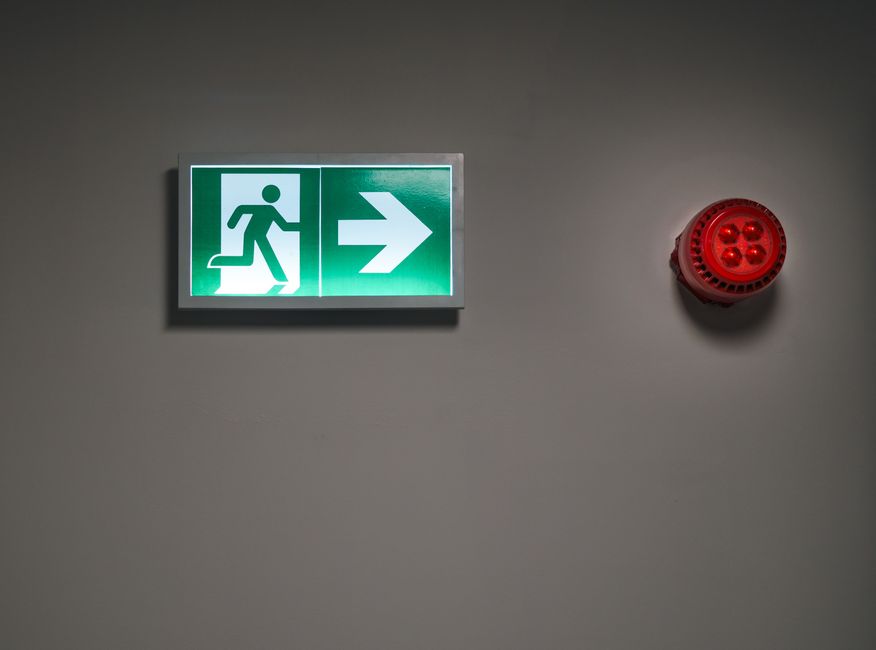
Photo by Jakub Zerdzicki · Pexels
A Medicare-certified ambulatory surgical center answers to more than one set of federal rules about emergencies, and CMS's own surveyor guidance says they are checked together: emergency preparedness is assessed alongside the health survey or the Life Safety Code survey.
The same guidance tells health surveyors that when a finding involves emergency power, they need to work out whether it falls under the Life Safety Code or the emergency preparedness rule, and to consult their Life Safety Code survey team to decide. If the rules need sorting out at survey time, it makes sense that they take some sorting out for the administrator or nurse manager keeping the binder too.
This post lays the rules side by side, shows where they overlap, and suggests one way to keep the paperwork from doubling.
The short answer
A surgical facility's emergency preparedness plan under 42 CFR §416.54 has four parts: a risk assessment and emergency plan, policies and procedures, a communication plan, and a training and testing program, each reviewed at least every 2 years. Separately, §416.44 requires the building to meet the 2012 Life Safety Code for ambulatory health care, which brings its own written evacuation plan, fire drills at least quarterly on each shift, emergency lighting, and backup power where general anesthesia or life-support equipment is used. The two overlap most on evacuation, drills and power.
Three Places the Rules Live
Emergency preparedness: 42 CFR §416.54
This is the rule most people mean by "the EP rule." It requires an all-hazards risk assessment and emergency plan; policies and procedures, including a system to track on-duty staff and sheltered patients, safe evacuation, and a way to shelter in place; a communication plan; and a training and testing program. The plan, policies, communication plan and training program are each reviewed at least every 2 years. The ASC emergency preparedness checklist walks through each requirement.
The building: 42 CFR §416.44
The environment standard is where fire safety lives. It requires an ASC to meet the Life Safety Code provisions for ambulatory health care occupancies "regardless of the number of patients served," using the 2012 edition of NFPA 101, and to follow the 2012 edition of NFPA 99, the Health Care Facilities Code. It also includes some specific operating rules that matter in an emergency:
- If a sprinkler system is shut down for more than 10 hours, the ASC must evacuate the affected area or set up a fire watch until the system is back in service.
- Emergency equipment for the operating room must be immediately available, appropriate for your patients, and maintained.
- Personnel trained in that equipment and in CPR must be available whenever a patient is in the ASC.
The governing body: 42 CFR §416.41
The governing body standard still says the governing body "develops and maintains a disaster preparedness plan," and requires an effective procedure for immediately transferring a patient who needs emergency care beyond the ASC's capabilities to a hospital. The emergency preparedness program you keep under §416.54 is a natural place to document that plan, with the governing body overseeing it.
Where They Overlap
Evacuation
The Life Safety Code survey form for ambulatory health care, CMS-2786U, includes tag K711: a written plan to protect all patients and evacuate them in an emergency, with staff periodically instructed on their duties. The emergency preparedness rule separately requires policies for safe evacuation, covering the care needs of evacuees, staff responsibilities, transportation, evacuation locations, and backup communication.
These describe the same event from two angles. The fire safety plan focuses on getting people out of the building. The emergency preparedness policies also cover what happens next: where patients go, how they get there, and how you keep track of them.
Drills and exercises
Tag K712 on the same form requires fire drills at least quarterly on each shift, held at expected and unexpected times, including transmission of the fire alarm signal and simulation of fire conditions.
The emergency preparedness rule requires exercises at least annually. Every 2 years, that means a full-scale community-based exercise, or a facility-based functional exercise when a community exercise is not available. In the other year, it means an additional exercise, which can be a mock drill or a facilitated tabletop exercise. An actual emergency that activates your plan exempts you from the next required full-scale or functional exercise.
Can a fire drill count toward the emergency preparedness exercise? CMS's guidance addresses this directly. It describes a facility using fire drills based on its risk assessment as its full-scale exercise in a given year, and encourages choosing a different hazard from the risk assessment the following year, so that testing covers more than one kind of emergency. Two cautions follow from that. A routine quarterly fire drill is usually narrower than a full-scale or functional exercise, so check that what you run matches the exercise type you are counting it as. And whatever you count, the rule requires you to analyze the response and keep documentation of it.
Power
This is the area that confuses people most, partly because a well-known emergency preparedness requirement does not apply to ASCs. The detailed generator standard in the emergency preparedness rule, surveyed as tag E-0041, applies to hospitals, critical access hospitals and long-term care facilities. ASCs are not on that list.
That does not mean power is unregulated for an ASC. Under the Life Safety Code survey:
- Emergency lighting of at least 1½ hours must be provided automatically (tag K291).
- Where general anesthesia or life-support equipment is used, the ASC must have an essential electric system in accordance with NFPA 99 (tag K292).
- Where there is a generator, it is maintained and tested under NFPA 110: inspected weekly, run under load for 30 minutes 12 times a year at 20 to 40 day intervals, run for 4 continuous hours every 36 months, with written records kept (tag K918).
CMS's emergency preparedness guidance adds that a facility which chooses to install a generator that no other rule requires should still consider the generator testing, inspection, fuel and location standards. Your risk assessment should also say what you will do if power fails in the middle of a case, since that is the scenario both sets of rules are ultimately about.
One Binder, Two Surveys
Nothing requires you to merge your fire safety and emergency preparedness documents. If it helps, you can keep one program and make the connections visible with a simple cross-reference at the front of the binder:
Cross-reference
- Evacuation: §416.54(b)(2) policies, and the K711 written evacuation plan
- Drills and exercises: §416.54(d)(2) exercises and after-action reviews, and K712 fire drill records
- Power: your risk assessment's power-loss scenario, and K291, K292 and K918 records where they apply
- Sprinkler outages: your fire watch or evacuation procedure under §416.44(b)(5)
- Hospital transfer: the §416.41(b) transfer procedure, referenced from your emergency plan
The people running a real evacuation will reach for one plan. A cross-reference keeps both sets of records pointing to it.
What This Post Does Not Cover
State licensing rules and accrediting organizations such as AAAHC, The Joint Commission and QUAD A can add requirements of their own, and §416.44 allows CMS to accept a state fire and safety code in place of the Life Safety Code where it finds that code adequately protects patients. Check with your state survey agency or accreditor about anything specific to your center.
If your center is putting its program together for the first time or rebuilding it, the surgery center emergency preparedness kit covers the §416.54 documents, written around surgical patient phases.
Sources
- 42 CFR §416.54, Condition for coverage: Emergency preparedness (Cornell LII copy of the eCFR, accessed October 2026)
- 42 CFR §416.44, Condition for coverage: Environment
- 42 CFR §416.41, Condition for coverage: Governing body and management
- CMS State Operations Manual, Appendix Z, Emergency Preparedness Interpretive Guidance, Rev. 204 (April 16, 2021): introduction, tag E-0015 and E-0041 guidance, and training and testing guidance
- CMS Form CMS-2786U (07/2018), Fire Safety Survey Report, 2012 Life Safety Code, Ambulatory Health Care: tags K291, K292, K711, K712 and K918
State licensing rules and accrediting organizations may add requirements. This article is general information, not legal or regulatory advice. Verify your own requirements at 42 CFR §416.54 and §416.44, and with your state survey agency or accreditor.