Ambulatory surgery centers · CMS survey prep
The ASC Emergency Preparedness Checklist: Everything §416.54 Requires
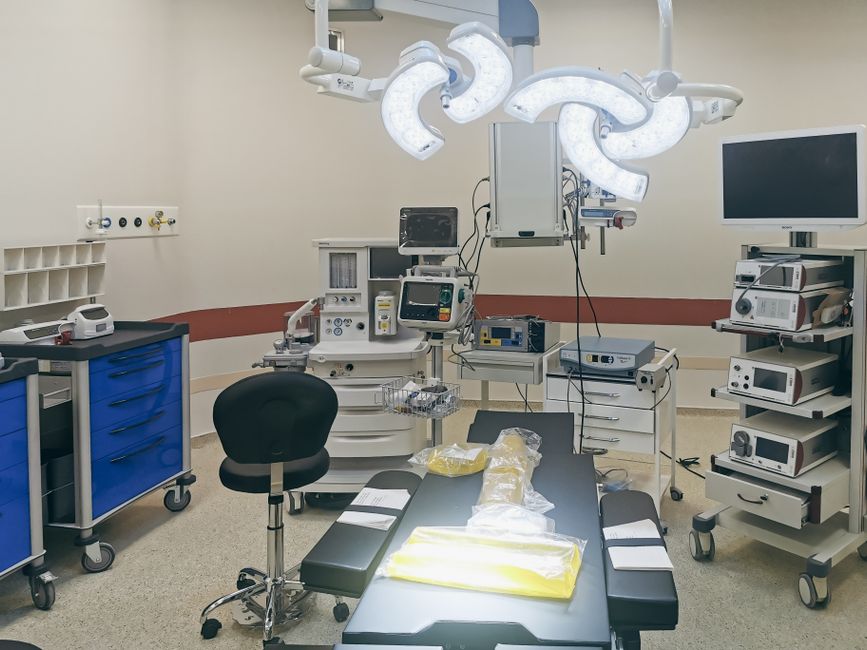
Photo by Mehmet Turgut Kirkgoz · Pexels
Running an ambulatory surgery center means you're already managing a dozen regulatory requirements before your first patient walks in the door. Emergency preparedness is one more, and it isn't a best practice you get to defer — it's a condition for coverage.
The good news: ASC emergency preparedness requirements under 42 CFR §416.54 follow the same four-element structure that CMS uses for every provider type. The challenging news: because you have patients under sedation or anesthesia in your facility, some of those requirements carry more weight than they do for a home health agency or outpatient clinic.
This post covers every requirement your ASC needs to meet, with an audit checklist at the bottom. Check it against your current documentation and close the gaps before your next survey.
What Makes ASCs Different
Ambulatory surgery centers face emergency preparedness challenges that other small healthcare facilities don't. Patients under anesthesia can't evacuate themselves, which means your evacuation plan needs to account for patients at every stage of a procedure — pre-op, intra-op, and recovery. Unlike home health agencies, your patients are in your building, so your plan has to cover sheltering them in place and tracking where each one is. §416.54 doesn't require you to stock food and water the way the long-term care rule does, but your risk assessment should still ask how long you could hold patients if nobody can leave. Procedures in progress can't always be stopped safely, and your plan needs to address how you handle an emergency that hits mid-surgery. And high patient turnover means the number and condition of patients in your facility changes throughout the day.
With that context, here's what CMS requires.
The Emergency Plan
Under §416.54(a), you must develop and maintain a written emergency preparedness plan, reviewed and updated at least every two years. The plan starts with a documented, facility-based and community-based risk assessment using an all-hazards approach.
For an ASC, your risk assessment needs to cover natural disasters in your area (earthquakes, hurricanes, tornadoes, severe storms), utility failures (a power outage during a procedure is your worst-case scenario — plan for it), infrastructure threats like water main breaks, gas leaks, and nearby hazmat incidents, internal threats including fire, medical gas leaks, IT system failures, and active violence, and infectious disease outbreaks.
From that risk assessment, the plan must include specific strategies for each identified emergency — not general statements, but actual descriptions. If your risk assessment identifies "extended power outage" as a risk, your plan should describe what happens when the power goes — if you have a generator, when you switch to it and how long it runs — at what point you cancel scheduled cases, and how you safely conclude cases already in progress. §416.54 doesn't require an ASC to have emergency or standby power. If you don't have it, the plan needs to say what you do instead.
Your plan also needs to address the types of patients you serve and their specific vulnerabilities during an emergency. Pediatric patients? Patients with mobility limitations? Patients who arrived by medical transport and don't have their own vehicle at the facility? Each of these requires a specific response strategy.
Round out the plan with continuity of operations — delegations of authority and succession plans documenting who makes the call to evacuate and who takes over if the medical director is unavailable — and a documented process for coordinating with local, state, and federal emergency management before and during a disaster.
Policies and Procedures
ASCs have facility-specific policy requirements that home-based providers don't face. Under §416.54(b), you must develop and implement written policies and procedures based on your emergency plan, risk assessment, and communication plan, reviewed every two years.
Patient and Staff Tracking
You need a system to track the location of every staff member on duty and every patient in your facility during an emergency. This isn't optional — if you evacuate, you need to account for everyone. If patients are transferred to another facility, you must document the receiving facility's name, location, and contact information. The E-0018 tag specifically looks for this.
Evacuation Procedures
Your evacuation policies must address patient care needs during evacuation (a patient in recovery from anesthesia has very different needs than a patient in the waiting room), staff responsibilities for who does what and who is responsible for which patients, transportation arrangements for patients who can't walk, evacuation locations with agreements from nearby facilities, and communication during evacuation with staff, patients' families, and the receiving facility. The E-0020 tag covers this, and for an ASC it carries the anesthesia problem with it: a patient who can't walk out under their own power needs a named staff member, a device, and a destination.
Shelter-in-Place
Not every emergency requires evacuation. Your policies must address how you'll shelter patients, staff, and volunteers in place when evacuation isn't safe or practical — a tornado warning during operating hours, an external hazmat incident requiring shelter until all-clear, or an active threat in the area requiring lockdown. The E-0022 tag checks for this.
Records, Staffing, and Waivers
You need a documented system for keeping patient records safe, confidential, and accessible during an emergency. For ASCs, this is especially important because a patient under anesthesia whose records become inaccessible is a patient safety crisis. Your staffing policies must cover how you'll use volunteers and integrate outside healthcare professionals during an emergency, handle emergency staffing when regular staff can't reach the facility, and contact off-duty staff. Finally, your policies should address your ASC's role during a Secretary-declared public health emergency when CMS may waive certain requirements under Section 1135.
A patient under anesthesia whose records become inaccessible is a patient safety crisis. The surveyor knows this — your plan should prove you do too.
The Communication Plan
Under §416.54(c), you must develop and maintain a communication plan, reviewed and updated at least every two years. You need current, accessible contact lists for all staff members, entities providing services under arrangement (anesthesia groups, pathology labs, equipment vendors), patients' physicians and surgeons, and volunteers. You also need contact information for emergency preparedness staff at federal, state, tribal, regional, and local levels.
In an ASC, communication during an emergency is especially critical because surgeons and anesthesiologists need real-time information to make patient safety decisions, families in the waiting room need updates, and receiving facilities need patient information if you're transferring. You need two ways to reach your staff and emergency management agencies — and your backup method should work when cell towers are overloaded. Consider two-way radios, satellite phones, or a landline-based phone tree.
Your plan also needs a HIPAA-compliant method for sharing patient information with other providers if you need to transfer patients during an emergency. At minimum: patient identification, procedure performed or in progress, anesthesia status, medications administered, allergies, and emergency contacts. And you need a way to communicate your facility's needs and capabilities to the local incident command.
Training and Testing
Under §416.54(d), every staff member, contractor, and volunteer must receive initial emergency preparedness training, with refreshers at least every two years and additional training when policies change significantly. You must document all training with evidence of staff knowledge — sign-in sheets, content covered, competency demonstrated. For ASCs, training should include hands-on components: how to move a patient from the OR table to an evacuation device, how to switch to backup power if you have it, how to lock down the facility. Classroom-only training won't prepare your team for a real emergency.
Your exercise schedule follows the same pattern as other providers: at least one per year, with a full-scale community-based or facility-based functional exercise required every two years. In the alternate year, you can run a tabletop exercise, mock drill, or workshop. For ASCs, the most valuable exercise is one that simulates an emergency during active procedures. What happens when the fire alarm goes off mid-surgery? Walk through it. Time it. Document it.
After every exercise, you must analyze what happened, document strengths and gaps, create an improvement plan with specific corrective actions, and update your emergency plan based on what you learned. This After-Action Report/Improvement Plan, formatted in the HSEEP standard, is the document that proves your EP program is a living system, not a dusty binder. If your ASC activates its emergency plan during an actual event, you're exempt from the next required full-scale or facility-based functional exercise for one year following the activation — but only if you document the activation and complete the after-action review.
The Audit Checklist
Use this to check your current documentation against what the surveyor will look for:
Emergency Plan
Policies and Procedures
Communication Plan
Training and Testing
Get This Done
The SurgeReady ASC Ready-Kit includes every template on this checklist, pre-mapped to the E-tags in Appendix Z. Fill in the blanks, put it in a binder, and hand it to the surveyor.
Here's a sample of what's inside:
Sample from the Ready-Kit
Section 3.2 — Evacuation During Active Procedures (E-0020)
Pre-Op Patients:
Intra-Op Patients (procedure in progress):
Recovery Patients:
Maps to Appendix Z, E-0020. Each field corresponds to a specific surveyor checkpoint.
The full kit includes templates for every item on the checklist above — risk assessment, emergency plan, tracking systems, evacuation and shelter-in-place procedures, communication plan, training logs, exercise scenarios, and the AAR/IP.
Or use this checklist and build it yourself. Either way, the requirements don't change — and the surveyor is coming whether you're ready or not.
ASC ready-kit
Get every template on this checklist — risk assessment, emergency plan, tracking systems, evacuation and shelter-in-place procedures, communication plan, training logs, exercise scenarios, and after-action report. All mapped to the E-tags in Appendix Z so the surveyor finds exactly what they're looking for.
Get the ASC Ready-Kit — $29942 CFR §416.54 — ASC Emergency Preparedness Requirements
CMS Emergency Preparedness Rule Overview
Appendix Z — State Operations Manual
ASPR TRACIE — ASC EP Requirements
CEMP Criteria for Ambulatory Surgery Centers
This post is educational and does not constitute legal or compliance advice. Consult your compliance team or legal counsel for guidance specific to your facility.
SurgeReady brings the same emergency preparedness tools large hospital systems use to community-based healthcare organizations. Get in touch.